

Achieving a net-zero energy home requires careful attention to every detail of the building envelope, but few aspects are as critical as airtightness. By minimizing unwanted air leakage, homeowners can dramatically reduce energy loss, improve comfort, and create a healthier indoor environment. This guide explores the principles and practical steps behind creating an airtight building for high-performance, low-carbon construction.
For those interested in the broader context of sustainable living, understanding energy efficiency in net-zero homes is a valuable starting point. This resource explains how maximizing efficiency is foundational to reaching net-zero goals.
Why Airtightness Matters in Sustainable Construction
Uncontrolled air movement through gaps, cracks, and poorly sealed penetrations is one of the leading causes of energy waste in buildings. In the context of airtight building net-zero construction, the goal is to create a continuous barrier that prevents outside air from entering and conditioned air from escaping. This approach delivers several key benefits:
- Reduced energy bills: Less air leakage means less heating and cooling is required to maintain comfortable temperatures.
- Improved comfort: Eliminating drafts and cold spots creates a more consistent indoor environment.
- Enhanced durability: Airtightness helps control moisture movement, reducing the risk of mold, rot, and structural damage.
- Better indoor air quality: With controlled ventilation, pollutants and allergens are kept at bay.
For those interested in how renewable systems contribute to these goals, see how net-zero homes produce energy for a detailed explanation of solar, wind, and other technologies.
Key Principles of an Airtight Building Envelope
To achieve the high standards required for net-zero construction, it’s essential to understand the core components of an airtight envelope:
- Continuous air barrier: Every part of the building envelope—walls, roof, floors—must be sealed without gaps or weak points.
- Sealed penetrations: Pipes, wires, ducts, and windows are common sources of leaks. Each must be carefully detailed and sealed.
- High-quality materials: Tapes, membranes, gaskets, and sealants should be durable and compatible with the building’s climate and structure.
- Attention to detail: Even the best materials can fail if not installed correctly. Skilled workmanship is non-negotiable.
For a deeper dive into balancing energy production and consumption, the article net-zero energy balance explained offers valuable insights.

Common Air Leakage Points and How to Address Them
Even the most advanced designs can fall short if typical problem areas are overlooked. Here are some of the most frequent sources of air leaks and recommended solutions:
- Windows and doors: Use high-performance units with integrated gaskets and install with proper flashing and sealant.
- Electrical outlets and switches: Install airtight boxes and use foam gaskets behind cover plates.
- Attic hatches and recessed lights: Seal with weatherstripping and use airtight light fixtures.
- Plumbing and HVAC penetrations: Apply flexible sealant or specialized gaskets where pipes and ducts pass through the envelope.
- Basement rim joists: Insulate and seal these critical junctions with spray foam or rigid insulation.
Regular inspection and testing are essential to ensure these measures remain effective over time.
Testing and Verifying Airtightness
Measuring the effectiveness of your air sealing efforts is a crucial step in airtight building net-zero construction. The most common method is the blower door test, which uses a calibrated fan to pressurize or depressurize the home and measure how much air leaks in or out. Results are typically expressed in air changes per hour at 50 Pascals (ACH50). For net-zero or Passive House standards, values below 1.0 ACH50 are often required.
Thermal imaging cameras can also help visualize leaks by highlighting temperature differences around problem areas. Investing in these tools or hiring a professional can ensure your home meets its airtightness goals.
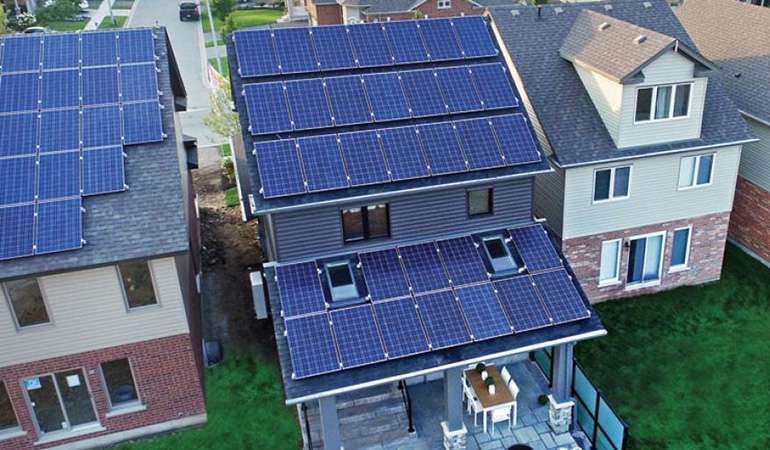
For more on integrating renewable energy systems with airtight construction, see the solar panels for net-zero homes guide for advice on sizing and installation.
Ventilation Strategies for Airtight Homes
While sealing a home is essential for energy efficiency, it’s equally important to provide controlled, healthy ventilation. Mechanical systems such as heat recovery ventilators (HRVs) or energy recovery ventilators (ERVs) are commonly used in high-performance homes. These systems:
- Exchange stale indoor air for fresh outdoor air
- Recover heat (and sometimes moisture) from outgoing air to reduce energy loss
- Maintain balanced air pressure to prevent moisture problems
Properly designed ventilation ensures that airtight homes remain comfortable and healthy for occupants.
Materials and Techniques for Superior Air Sealing
Modern construction offers a range of products and methods to achieve airtightness:
- Self-adhered membranes: Applied to sheathing or framing to create a continuous air barrier.
- High-performance tapes: Used to seal seams, joints, and penetrations in the air barrier.
- Spray foam insulation: Effective for sealing irregular gaps and hard-to-reach areas.
- Gaskets and sealants: Flexible materials that accommodate movement and maintain a tight seal over time.
Choosing the right combination depends on climate, building type, and budget. Consistency and attention to detail during installation are more important than any single product.
For more information on the future of sustainable homes, explore this overview of net-zero home building and its impact on energy use and comfort.
Integrating Airtightness with Other Net-Zero Strategies
Creating a low-leakage envelope is just one part of the journey toward a zero-energy home. To maximize results, airtightness should be combined with:
- High-performance insulation to minimize heat transfer
- Efficient windows and doors to reduce thermal bridging
- Renewable energy systems such as solar panels
- Energy monitoring to track and optimize usage
- Battery storage for reliable power, as explained in battery storage for net-zero homes explained
By integrating these elements, homeowners can achieve true energy independence and long-term savings.
Frequently Asked Questions
What is the ideal airtightness level for a net-zero home?
Most experts recommend achieving an air leakage rate below 1.0 ACH50 (air changes per hour at 50 Pascals) for net-zero or Passive House standards. This ensures minimal energy loss and supports efficient ventilation strategies.
How can I find air leaks in my home?
Common methods include blower door testing, which quantifies leakage, and using a thermal imaging camera to visually detect problem areas. Smoke pencils or incense sticks can also help identify drafts around windows, doors, and penetrations.
Will making my home airtight cause moisture or mold problems?
Not if you provide proper mechanical ventilation. Airtight construction controls where air enters and exits, allowing you to manage humidity and air quality more effectively. HRVs and ERVs are designed to maintain healthy indoor conditions in sealed homes.
